Spotlights
Lecturer Spotlight
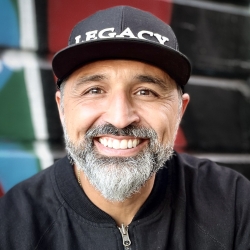
Carlos Hagedorn, M.A.
Hi! My name is Carlos Ernesto Cuauhtémoc Hagedorn. I am a Xicano-Filipino educator, teacher-activist, and community builder whose work is rooted in love, justice, and transformation.
For over 25 years, I have served as a youth developer and educator, working with students across elementary, middle, high school, and college levels in San Francisco, New York City, Arizona, Napa Valley, and San Diego. My life's work centers on uplifting the brilliance of young people through humanizing, community-rooted Ethnic Studies.
Since 1998, I have been part of the College of Ethnic Studies at San Francisco State University, where I earned both my B.A. in Raza Studies and my M.A. in Ethnic Studies. During my time as an undergraduate, graduate student, and teaching assistant, I had the privilege of studying under the mentorship of SFSU Lecturer Emeritus, Professor Felix Kury.
My years at SFSU and the College of Ethnic Studies were critical in developing my understanding of the relationship between scholarship and activism. I was involved in several campus political projects, including organizing a living-wage coalition for cafeteria workers, protesting student tuition hikes, defending Ethnic Studies from attacks, renaming the psychology building to Ethnic Studies and Psychology, and participating in solidarity actions with Palestine and the Cuban Educational Project. These experiences shaped my critical consciousness and commitment to global solidarity, which I continued to develop through my international education and justice work in Cuba, El Salvador, and Venezuela, building connections across borders and supporting internationalist movements in the spirit of Third World solidarity.
In 2012, I co-founded the Legacy Youth Project (LYP), a nationally recognized Ethnic Studies youth program serving students in grades 5 – 12 across Napa Valley. LYP’s innovative “heartwork” model — a pedagogical approach grounded in cultural identity, community connection, and healing — gained national attention and was featured in the acclaimed documentary The Mask You Live In. My teaching practices have been studied and cited in scholarship on Ethnic Studies, culturally sustaining pedagogy, and transformative youth development.
Since 2016, I have been a faculty member in the Race and Resistance Studies and, since 2023, in the Latina/o Studies. I have also had the opportunity to teach in the METRO program, which has been one of my highlights as a teacher at SFSU. It has been an absolute honor to teach for the Race and Resistance Studies department.
As an educator, I have taught courses across Comparative Ethnic Studies, Chicane Latine Studies, American Indian Studies, and Black Studies, bringing a multidisciplinary and relational approach to my classrooms. Additionally, as an educational consultant, I work with school districts to design and implement Ethnic Studies curricula, support teacher development, and embed humanizing, youth centered practices into educational systems. I served as a member of the board of trustees and president of the Napa Valley Unified School District between 2012 and 2016. I am co-founder of the Coalition for Liberated Ethnic Studies, a national network of scholars, educators, and organizers committed to advancing critical, justice-oriented Ethnic Studies nationwide.
One of my life's purposes has been to teach, dedicated to liberatory praxis education and to build a world where young people are seen, valued, and empowered to transform their own lives and communities. Lastly, I find joy through community building, learning, teaching, traveling, exercising, land work, spiritual growth, and being with loved ones.
Alumni Spotlight
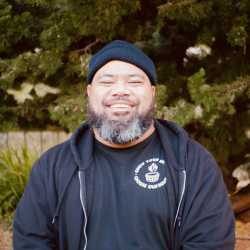
Andrew Van Fa'aloalo Vai
Hello, my name Andrew Van Fa'aloalo Vai, and I received my Bachelors in Sociology and Masters in Ethnic Studies at San Francisco State. I am a Samoan and Tokelauan. My parents migrated from islands of American Samoa specifically the villages of Ofu and Fitiuta, Manu'a. They settled in the city of San Francisco where I grew up in Excelsior.
I am proud to be from San Francisco, I have so many memories here especially my introduction to the field of Ethnic Studies. Since I was a child, I struggled with school and never saw myself even pursuing higher education. I ended up going to community college to play football, where my first college course was an Ethnic Studies class.
Football did not work out for me, but I did pass the Ethnic Studies course that semester. I was always a "C" average student, never feeling smart enough in school, and taking that course changed my life. The content covered in the class was interesting and the teacher made it relevant to my personal experience. Furthermore, they connected me to my college advisor who kept me on track with school. I started to take more courses in Ethnic Studies and began to excel in college. That experience in that class never left me, and it inspired me to pursue a masters in Ethnic Studies.
I currently work as an adjunct faculty in Ethnic Studies at Chabot College of Hayward. Every day in this job, I try to replicate the impact that Ethnic Studies had on me with my own students. Some days are tough, but most days, I am blessed to be able to be in community with my students while supporting them on their educational journey.
My goal is to keep teaching in the field of Ethnic Studies while building Ethnic Studies programming more catered towards for my Pacific Islander community in the Bay.
Lastly, it took a village to get me where I am at. So I want to shoutout some of the amazing educators at San Francisco State who supported me. Shoutout to Levalasi Loi-On, Anantha Sudhakar, Sarah Wongking-Tanuvasa, Dr. John Carlos Perea, Dr. Andrew Jolivette, Dr. Alyson Tintiango-Cubales and Larry Salomon.
Fa'afetai Lava (Thank you).
Student Spotlight
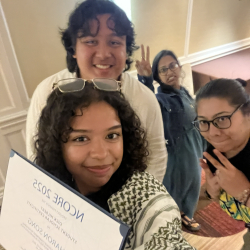
Sharon Song Discua
Sharon Song Discua is a graduating student majoring in Race & Resistance Studies and Psychology. Their understanding of society and journey through higher education has been deeply influenced by their Central American, working-class, immigrant background. Raised in the Bay Area, Sharon and her family heavily depended on community support, which impels her to be involved in student and community organizing efforts throughout the Bay. Sharon currently works at El Concilio, a local nonprofit, alongside dedicated and seasoned Promotora's committed to increasing access to education and economic opportunities for underserved communities.
Understanding the importance of learning about what once was, they are drawn to liberation psychology, Third World feminist and internationalist liberation struggles, and most importantly, learning about alternative social orders and structures that challenge oppressive social and material arrangements that impede many from living a dignified life. Growing up, Sharon was taught that knowledge — knowing — is one of the most important things in life. Because of this continuous inculcation, by her community, of the power of education, Sharon has found herself reflected in the history of people and communities she has never met. Aside from allowing her to see herself as part of a broader history of struggle, Race & Resistance studies allowed them to understand that knowledge is a form of resistance. Through learning about the histories and ongoing efforts of oppressed peoples, Sharon is reminded that what is learned in the classroom is only effective if materialized, taught in service of the people.
Student Spotlight
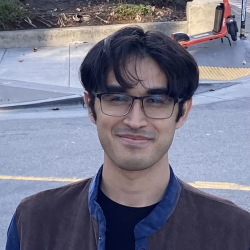
Jesus Carrillo
Originally from Los Angeles, Jesus Carrillo moved to San Francisco to further his education in Race and Resistance Studies and Sociology, a first generation Mexican- American and the first in his family to pursue a higher education.
San Francisco State University was one of the first colleges to have an Ethnic Studies Department in the country. This sparked interest in Jesus's journey to education and how to apply this to better help his community. During his time at SF State, Jesus has done incredible work such as community work with PODER: a Latinx organization that seeks to further help the Latinx community of the Bay Area. To oral history reports about undocumented Latina women working in the fields of woodland in the late 70's. To research focusing on gentrification of Mexican neighborhoods in Los Angeles. To his capstone addressing the lack of queer sex education in communities of color. Even teaching a course in the students EXCO program here at SF State titled " The Latinx School To Prison Pipeline" of Fall 2025.
Race and Resistance Studies has helped Jesus find a voice, give him valuable insight, to think critically, and nurture a social consciousness. Jesus hopes to become a community college professor, cultural strategist and analysis, and a mentor.
Announcements
Department News
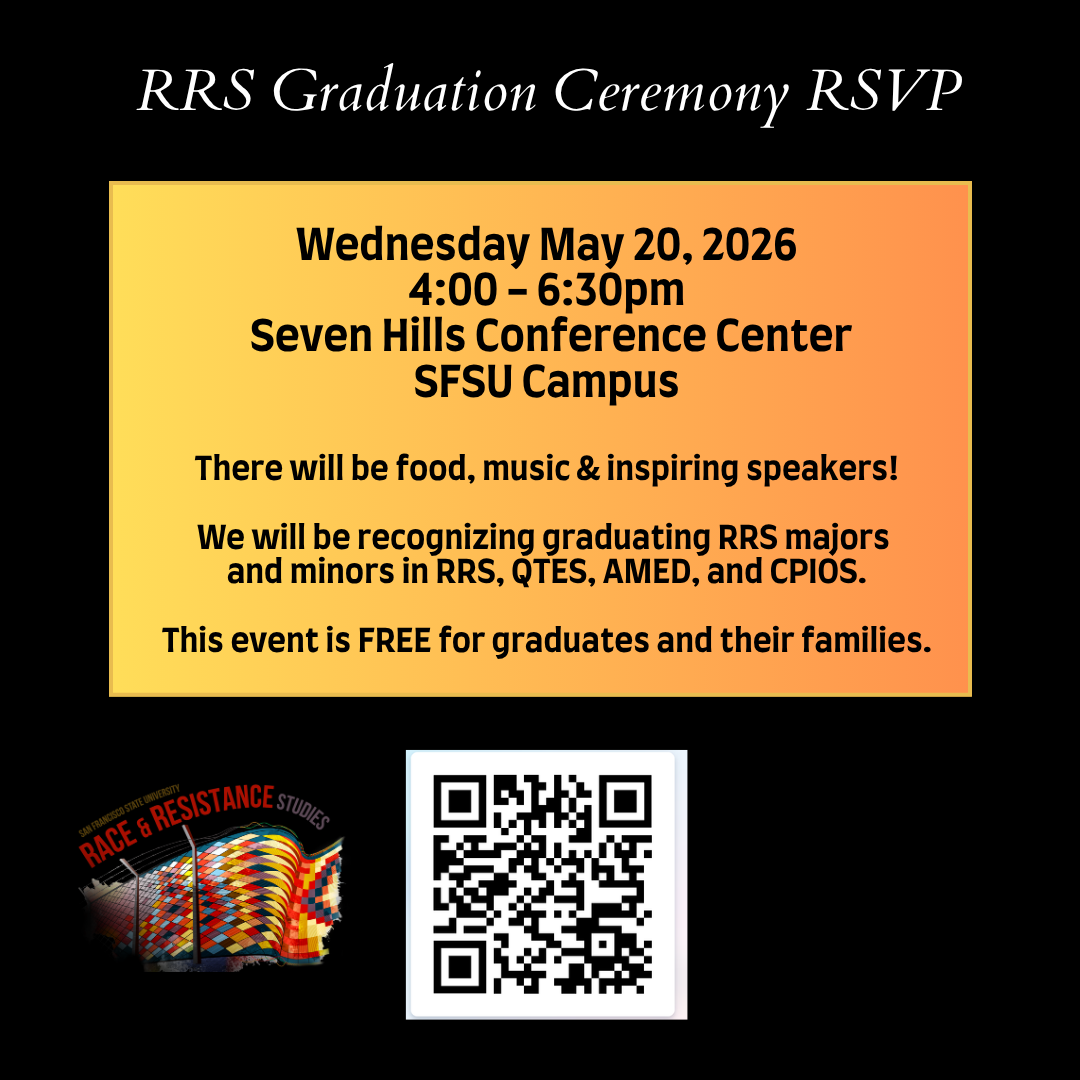
We will be recognizing graduating RRS majors and minors in RRS, QTES, AMED, and CPIOS.
There will be food, music & inspiring speakers! This event is FREE for graduates and their families.
After 7 years of leadership, Dr. Falu Bakrania will be stepping down as Chair of RRS. The department is excited to welcome Dr. Cesar Ché Rodriguez who will be starting his 3-year term at the start of Fall 2026. You can learn more about Dr. Rodriguez and his research, writing, and community work.
Please join us in congratulating him!
Sam Maina (he/him) is a third year student double majoring in Race and Resistance Studies and Political Science with a minor in Queer and Trans Ethnic Studies and a minor in Spanish. He is an active contributor to the campus community as a Resident Assistant at West Grove Commons, Mental Health Education Assistant with Gator Health and Wellbeing, and President of the Latinx Queer Club. In his free time, he enjoys playing guitar, spending time with friends, and going for walks.
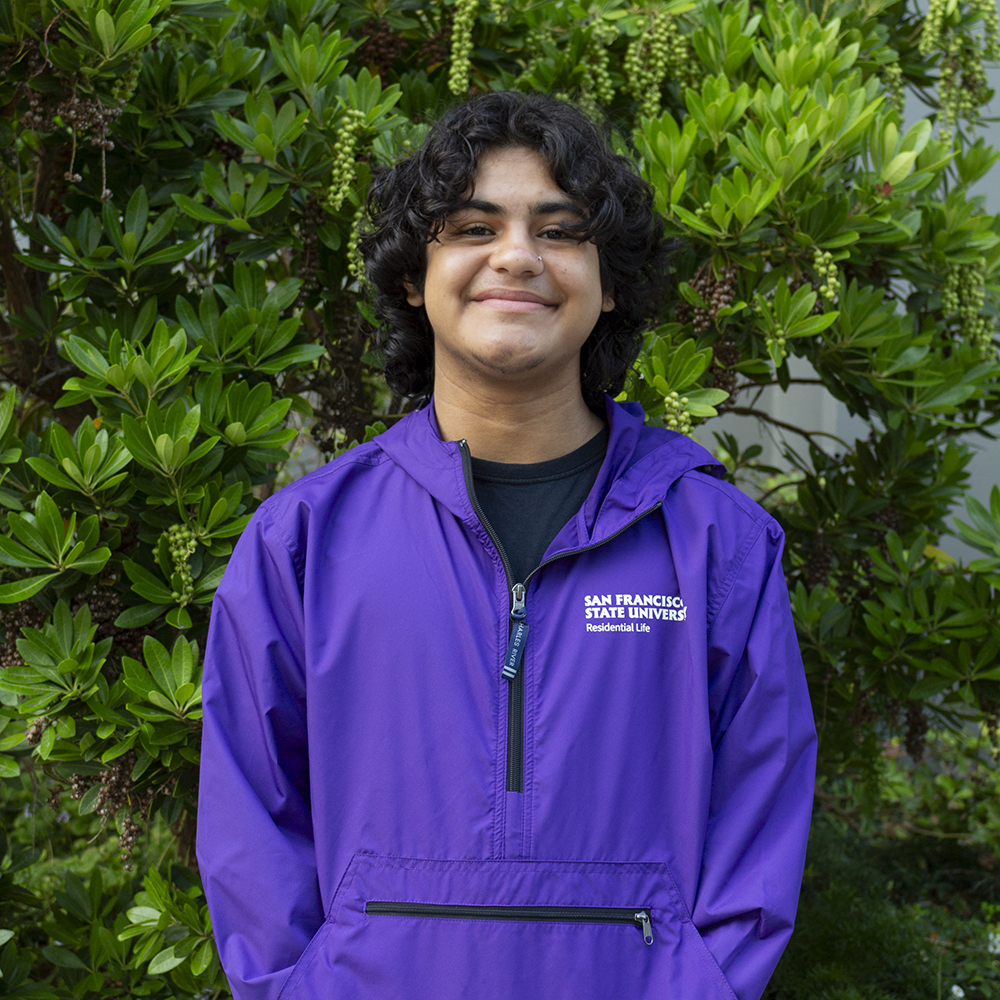
JJ Bernas is a 4th year Race & Resistance major hailing from Antioch, CA. He currently is the chairperson of the League of Filipino Students, a Filipino youth anti-imperialist organization fighting for national democracy linking issues from the Philippines that affect Filipinos abroad. Additionally, JJ volunteers at the Filipino Community Center helping deliver groceries for Filipino elders in the Excelsior and previously as a youth mentor for their Kabataan (Youth) program. JJ enjoys cooking family style Filipino meals for others and eats half of it.
Dr. Rama Ali Kased’s SF BRIDGE (Building Research Insiders to Dissipate Gaps in Equity) proposal, submitted to the Tobacco-Related Disease Research Program (TRDRP) and managed by UCORP, has been selected for funding.
The SF BRIDGE program grants a unique opportunity for San Francisco State University (SFSU) students interested in becoming insider researchers to learn about health research, policy and activism. The project brings together University of San Francisco (UCSF), Department of Race and Resistance Studies, and the Metro College Success Program (Metro) to create a collaborative pathway for students to engage in community-based health research and social justice work.
Congratulations and thank you for the dedication and effort behind this $829K, five-year project.
Faculty News
Cesar Rodriguez served as a moderator and presenter on the panel titled "Abolition In These Times," for the 2026 CFA Equity Conference. He was joined on this panel by Thandisizwe Chimurenga, an award-winning multi-media freelance journalist and activist based in Los Angeles, CA, who spoke on the incarceration of political prisons. Pedro Rios, director of the American Friends Service Committee’s U.S./Mexico Border Program, presented as well, and spoke on anti-migrant border violence. Che spoke on the CFA campaign to shut down empty state prison capacity, and redirect the savings to fund direct instruction and student wellness in the CSUs, a proposal that is aligned with social movement unionism and abolitionism.
This presentation examines the California Faculty Association’s (CFA) campaign to shut down five state prisons amid a continued decline in the incarcerated population and to redirect the resulting savings toward funding the California State University (CSU) — the People’s University. The campaign directly challenges contrived narratives of budget austerity that have long justified disinvestment in public education while expanding the carceral state. If successful, this campaign would correct the 50 year trend where the State of California dedicated more funds and resources towards human caging in state prisons than was dedicated to funding public higher education, all while increasing CSU student tuition and fees as the CSU student population became larger and more diverse. The CFA campaign exposes the racial and economic priorities embedded in state budgeting and reframes debates over public spending as questions of democratic investment: how resources are distributed, whose futures are valued, and what kinds of institutions the state sustains.
Omar Zahzah (Assistant Prof. of AMED Studies Dept. of Race & Resistance Studies, SFSU) will elaborate the concept of digital settler colonialism and its utility as a framework for understanding the scope and scale of American Big Tech's facilitation of the Zionist settler-colonial project, from social media censorship to Al-powered genocide.
On March 4, 2026, Dr. Ponipate Rokolekutu, Assistant Professor in Race and Resistance Studies at San Francisco State University, was featured as an invited speaker at the Asian American Law Journal Symposium hosted by UC Berkeley Law.
The symposium, titled “U.S. Imperialism in Asia and the Pacific,” brought together leading scholars from across the Bay Area and Hawaiʻi to examine the enduring legal, political, and social impacts of U.S. imperial expansion across Asia and Oceania.
Dr. Rokolekutu joined an interdisciplinary panel of scholars from UC Berkeley, San José State University, and the University of Hawaiʻi at Mānoa, contributing a critical Pacific Islander and Indigenous perspective to the discussion of empire, law, and colonial governance in the Pacific.
His participation highlighted the importance of centering Native Hawaiian and Pacific Islander (NHPI) histories, lived experiences, and intellectual traditions within broader conversations about U.S. imperialism. Drawing from his scholarship in Critical Pacific Islands and Oceania Studies, Dr. Rokolekutu’s contribution foregrounded the ways imperial structures continue to shape questions of land, sovereignty, migration, militarization, and racialized visibility for Pacific peoples.
For the Department of Race and Resistance Studies, Dr. Rokolekutu’s presence at this symposium also underscores the department’s ongoing commitment to Ethnic Studies as a site of truth-telling, resistance, and transformative justice.
His work continues to bridge classroom pedagogy, community advocacy, and public scholarship, bringing Pacific Islander voices into critical legal and interdisciplinary conversations at the regional and national level.
The symposium was hosted by the Asian American Law Journal, UC Berkeley Law’s Thelton E. Henderson Center for Social Justice, and the Center for Race and Gender, followed by a public reception.
Congratulations to Dr. Rokolekutu on this important invitation and for representing Race and Resistance Studies in this significant scholarly forum.
Race and Resistance Studies proudly celebrate Dr. Ponipate Rokolekutu, Assistant Professor in the Department of Race and Resistance Studies, who has been invited to participate as a panelist at the 2026 Asian Pacific American Institute for Congressional Studies (APAICS) Legislative Leadership Summit on Capitol Hill in Washington, DC.
Dr. Rokolekutu will join the panel “Celebrating and Preserving Our History,” a timely national conversation as the United States approaches its 250th anniversary. The panel will examine how the American story can be more fully and accurately told by centering the histories, contributions, and ongoing struggles of Asian American, Native Hawaiian, and Pacific Islander communities.
Drawing from his scholarship in Critical Pacific Islander and Oceania Studies, Dr. Rokolekutu will bring attention to the often-overlooked narratives of Native Hawaiian and Pacific Islander communities within the broader AANHPI framework. His contribution will highlight the importance of visibility, historical truth-telling, and the indispensable role of Pacific Islander communities -including Fijians — in shaping the nation’s social fabric, particularly through labor in the care economy and community resilience.
This invitation reflects Dr. Rokolekutu’s ongoing commitment to advancing Pacific Islander visibility, decolonial scholarship, and public engagement at the national level. The Department of Race and Resistance Studies congratulates Dr. Rokolekutu on this important recognition and contribution.
Witness to the Hellfire of Genocide: A Testimony from Gaza
Kased, R. A., & Marks-Block, T. (2026, February 5). Review of Witness to the Hellfire of Genocide: A Testimony from Gaza, by W. Said. Antipode Online.
We need solidarity, not grades: The collective labor of undoing grades in a social justice academic program.
Kased, R. A., Schwarz, V., Malik, S., Shada, A., & Bartolome, T. (forthcoming). We need solidarity, not grades: The collective labor of undoing grades in a social justice academic program. Feminist Formations.
It’s for my science daughters”: A portrait of Dr. Leticia Márquez-Magaña’s [counter]storied legacies for Latinas and STEM.
Vázquez, M. A., Kased, R. A., & Guzman-Morales, J. (forthcoming). “It’s for my science daughters”: A portrait of Dr. Leticia Márquez-Magaña’s [counter]storied legacies for Latinas and STEM. Association of Mexican American Educators Journal.
Past Events
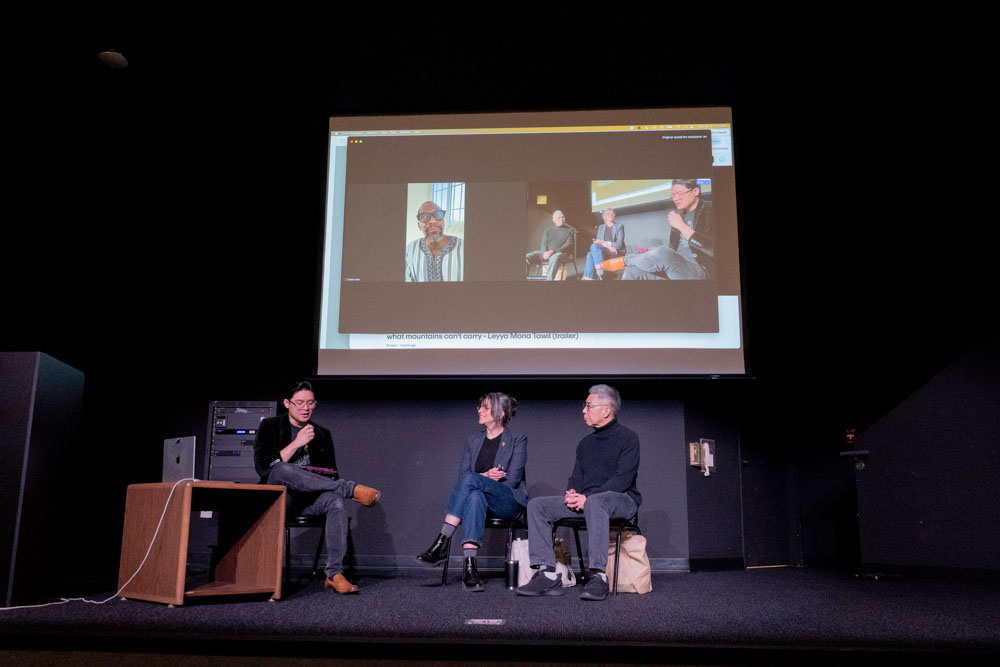
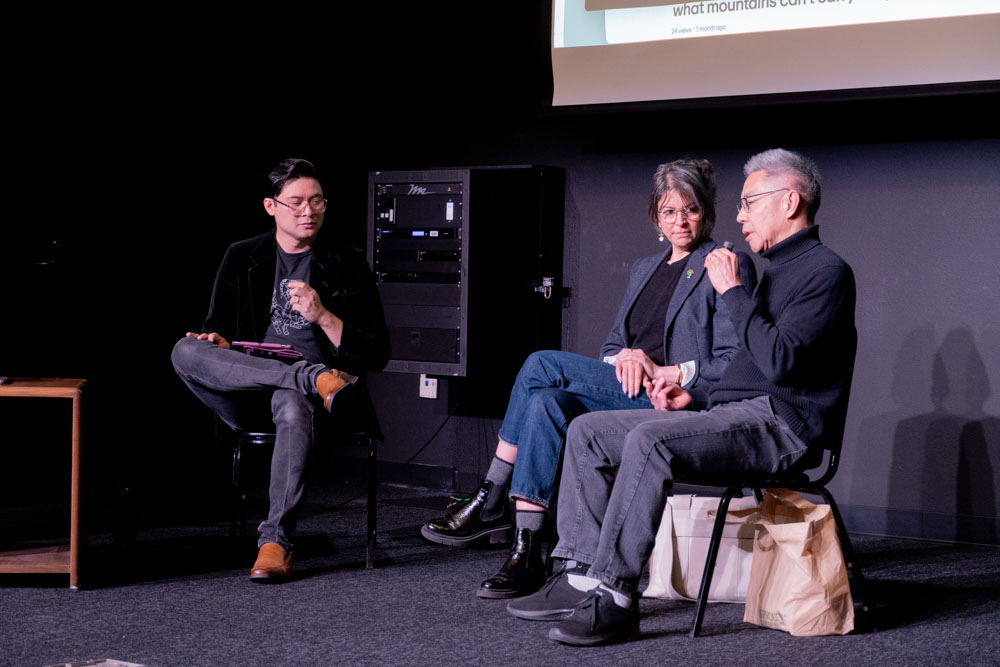
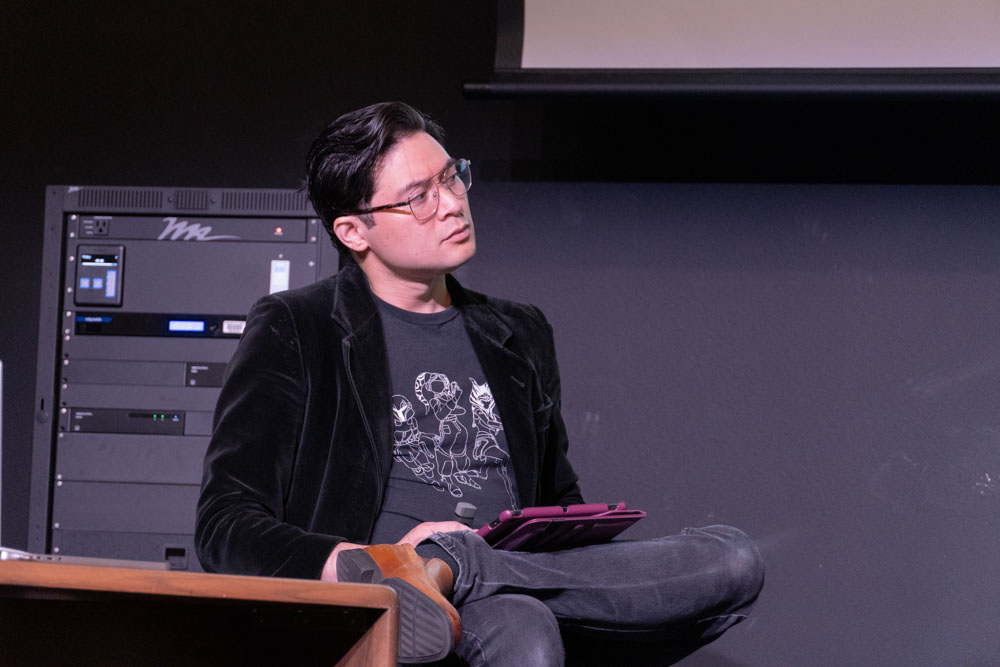
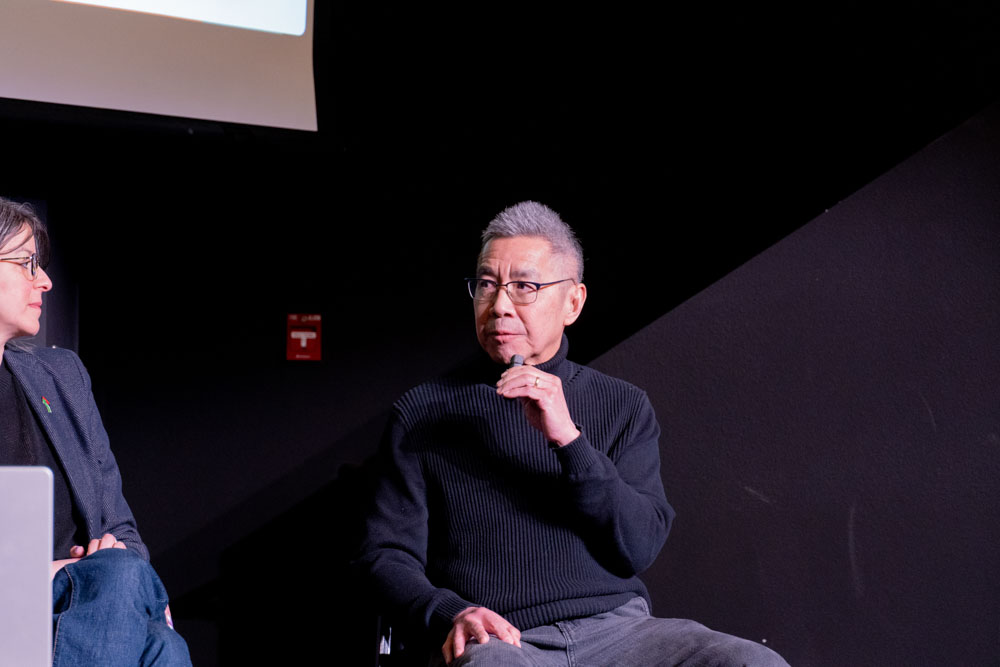
SFSU's Department of Race & Resistance Studies presented Fire Music: A Discussion on Revolutionary Songs and Sound. Over 100 students attended the lively and enriching event, which explored the link between social transformation and narratives in musical practice and innovation. The panel centered on three musicians: Jon Jang, jazz pianist and cofounder of the groundbreaking Asian Improv Arts organization, Palestinian-Syrian sound artist Leyya Mona Tawil, and hip-hop pioneer M-1 (of Dead Prez). The event was an insightful and thought-provoking examination of what it means to make music in times of ongoing and rife inequality. (Moderated by Karl Evangelista.)